Article
Quick Answer: Acoustic detection locates a leak by listening for the sound pressurized water makes as it escapes a pipe, while thermal imaging locates a leak by detecting temperature differences on a surface caused by water nearby. Both are non-invasive, and they’re often used together to confirm a leak’s location.
How Acoustic Detection Works
Acoustic detection uses specialized listening equipment sensitive enough to pick up the sound of water escaping a pressurized line — a sound that’s typically far too faint for the human ear to detect on its own, especially through concrete, flooring, or soil. A technician moves the equipment across the suspected area, listening for where that sound is loudest, which narrows down the leak’s approximate location.
Best suited for: pressurized supply-line leaks where sound can travel through the surrounding material — common for slab and underground leaks.
How Thermal Imaging Works
Thermal imaging uses an infrared camera to detect temperature differences on a surface. Water from a leak — especially a hot-water line — often creates a temperature signature that’s different from the surrounding area, even when there’s no visible moisture yet. The camera reveals that pattern, which helps narrow down where the leak likely is.
Best suited for: situations where a temperature difference is likely to be present, such as a leaking hot-water line, and as a confirming method alongside acoustic detection or pressure testing.
Why They're Often Used Together
Neither method is treated as the single, final word on its own. Acoustic detection and thermal imaging measure two different physical signals, so using them together — along with pressure testing where appropriate — gives a more confident, cross-checked read on a leak’s location before anything is opened up. Which combination makes sense for your situation depends on the type of leak suspected; see our comparison of slab, underground, and sewer leaks for how that’s determined.
Which One Do You Need?
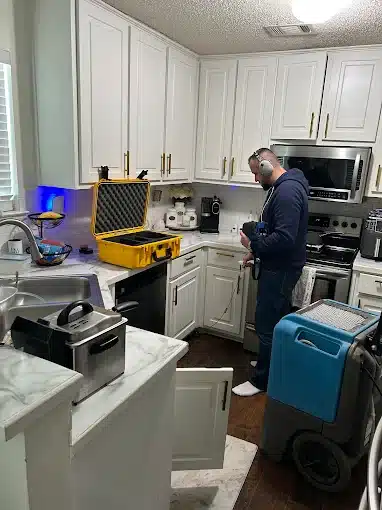
That’s not usually a decision you need to make yourself — a technician selects the appropriate combination of methods based on your specific situation during the inspection. If you’re curious what a visit actually involves, see what happens during an inspection.
Get Started
Call (470) 454-5051 to describe what you’re seeing, and we’ll determine which diagnostic methods make the most sense for your property.
FAQ
Is thermal imaging more accurate than acoustic detection?
Neither is universally “more accurate” — they detect different signals (sound vs. temperature) and are often used together for a more confident result rather than relying on just one.
Can thermal imaging find a leak with no visible moisture yet?
Yes, in many cases. Thermal imaging can pick up a temperature difference caused by a nearby leak even before moisture becomes visible on the surface.
Do I need to choose which method is used?
No. A technician determines which combination of diagnostic methods is appropriate for your specific situation during the inspection.