
Article
Quick Answer: A slab leak occurs in a water line running beneath a home’s concrete foundation. An underground leak occurs in a buried line outside the foundation, often between the meter and the building. A sewer or drain leak occurs in the wastewater lines, not the fresh water supply — and each requires different diagnostic methods to locate.
Slab Leak
A slab leak happens when a water line running underneath a home’s concrete foundation develops a crack or break. Because the line sits beneath the slab itself — not just outside the building — diagnostic testing (pressure testing, acoustic detection, and thermal imaging) is used to narrow down the location before any concrete is opened.
Common signs: a warm spot on the floor, a rising water bill, the sound of running water, cracks in the foundation or flooring.
Underground Leak
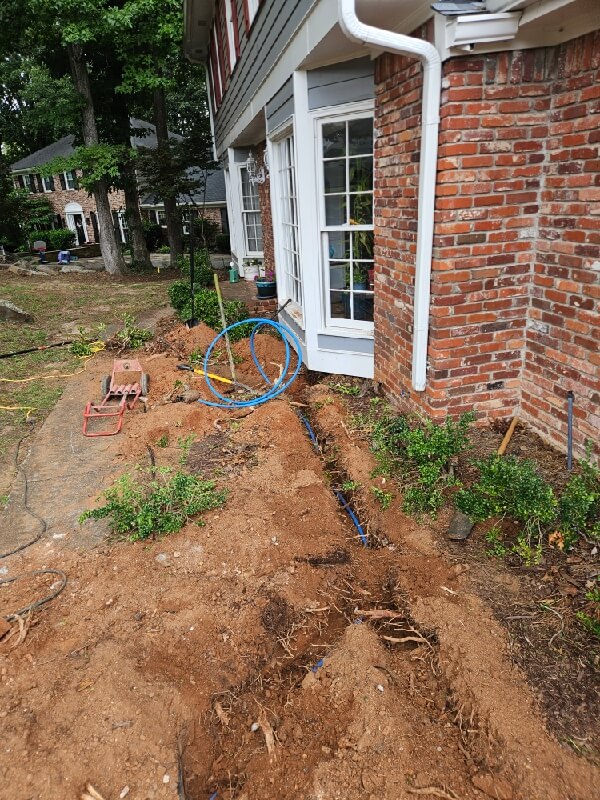
An underground leak happens in a buried water line outside the home’s foundation — typically between the water meter and the building, or between separate structures on a larger property. These lines run through soil, not concrete, so wet or unusually lush patches in the yard are a much more common sign than they would be with a slab leak.
Common signs: wet or soggy yard patches regardless of weather, a rising water bill, reduced water pressure.
Sewer or Drain Leak
This is the one that’s easiest to confuse with the other two, because it can also happen underground or beneath a slab — but it’s a fundamentally different system. A sewer or drain leak involves the wastewater lines carrying used water away from the property, not the fresh water supply lines bringing water in. Detection methods differ too: video camera inspection, dye testing, and hydrostatic testing are used instead of (or alongside) the pressure and acoustic methods used for supply-line leaks.
Common signs: sewage odors, slow or gurgling drains, sewage backup, unusually green or lush grass over the line (from nutrient-rich wastewater).
Why the Distinction Matters
Because each of these involves a different type of line and a different diagnostic approach, correctly identifying which one you’re dealing with — before testing even begins — affects what equipment and methods a technician brings to the job. That’s part of why an initial conversation about your symptoms matters before scheduling.
Not Sure Which One You Have?
That’s normal — the visible symptoms can overlap. Describe what you’re seeing to our team at (470) 454-5051, and we’ll help figure out which type of leak is most likely before we begin testing.
FAQ
What's the main difference between a slab leak and an underground leak?
A slab leak occurs in a water line beneath a home’s concrete foundation. An underground leak occurs in a buried line outside the foundation, such as between the meter and the house.
Is a sewer leak the same as a water line leak?
No. A sewer or drain leak involves the wastewater lines carrying used water away from the property, while a slab or underground leak involves the fresh water supply lines bringing water in. They require different detection methods.
How can I tell which type of leak I have?
Certain signs point one direction or another — a warm floor spot suggests a slab leak, a wet yard suggests an underground leak, and sewage odor or slow drains suggest a sewer leak — but an accurate diagnosis comes from professional testing, not guessing from symptoms alone.