Water Leak Detection in Metro Atlanta
A hidden water leak rarely announces itself clearly. It shows up as a water bill that doesn’t add up, a damp patch on a wall, or a faint sound of running water when every faucet in the house is off. By the time it’s obvious, it’s often been running for weeks. Georgia Water Leak Detection specializes in finding these leaks — inside walls, under floors, behind fixtures, and throughout residential and commercial plumbing systems — using diagnostic methods built to locate the source without tearing the property apart to look for it.
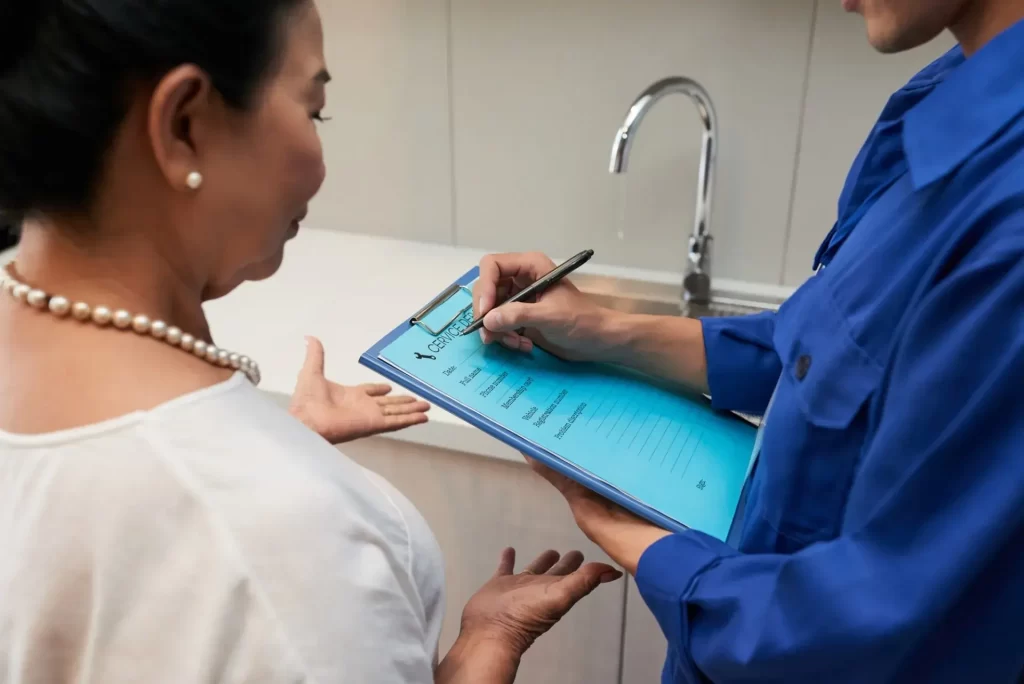
Signs You May Have a Hidden Water Leak
- Your water bill has increased without an obvious explanation
- Your water meter keeps moving even when every fixture is off
- You hear water running inside a wall or under the floor
- A section of flooring feels warm, damp, or soft
- You notice water stains, mold, or peeling paint on a wall or ceiling
- Water pressure has dropped without a clear cause
- A plumber has told you they suspect a leak but couldn't confirm its location
Any one of these is worth a closer look. Several together are a strong signal it’s time to schedule an inspection.
How We Find Hidden Water Leaks
Hidden leaks can be behind a wall, under a slab, inside a ceiling, or running along a pipe that’s no longer accessible without demolition. Rather than start by opening up the most likely spot, we start by testing.
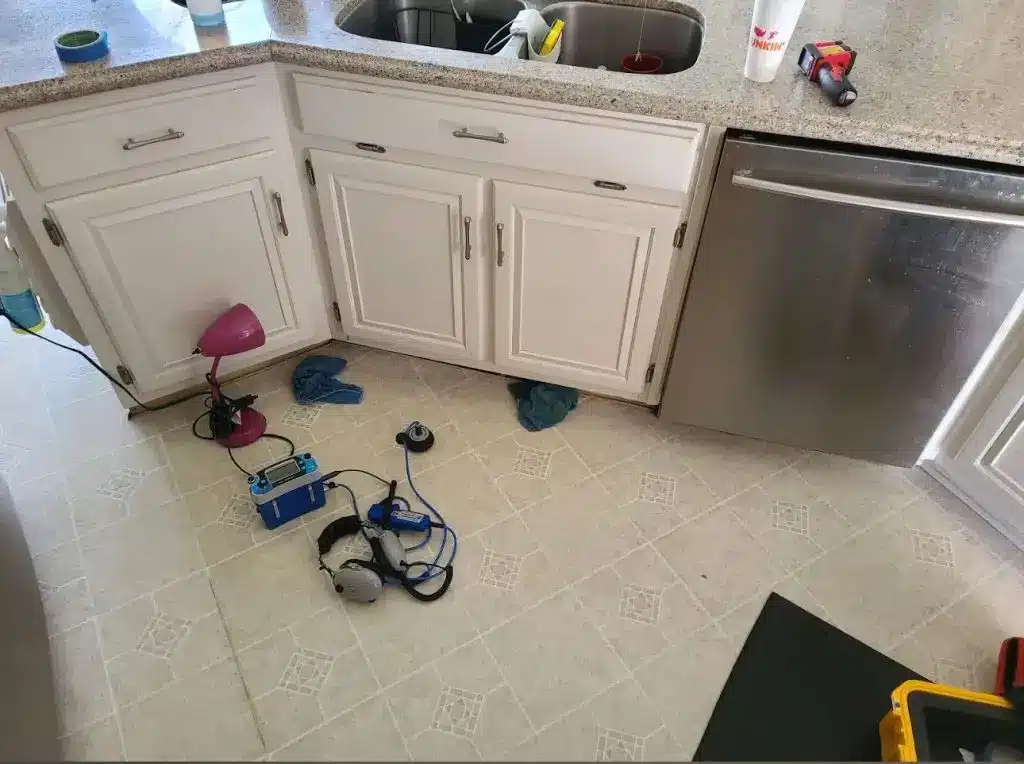
Pressure testing confirms whether the plumbing system is holding pressure the way it should, which tells us a leak exists even before we know exactly where. Acoustic detection uses sensitive listening equipment to pick up the sound of water escaping under pressure, which can travel through pipes and structure well away from the actual leak point. Thermal imaging can reveal temperature differences on a wall or floor surface caused by a leaking hot water line. Tracer gas testing introduces a safe, detectable gas into the line that escapes at the leak point and can be traced with a sensor. Isolation testing and meter testing help us narrow down which section of the plumbing system — or which fixture or line — is actually responsible.
We use whichever combination of these methods fits your specific plumbing system, the suspected leak type, and the property itself. The goal is always the same: identify the leak’s approximate location with confidence before anything gets opened up.
How We Find Hidden Water Leaks
Hidden leaks can be behind a wall, under a slab, inside a ceiling, or running along a pipe that’s no longer accessible without demolition. Rather than start by opening up the most likely spot, we start by testing.
Pressure testing confirms whether the plumbing system is holding pressure the way it should, which tells us a leak exists even before we know exactly where. Acoustic detection uses sensitive listening equipment to pick up the sound of water escaping under pressure, which can travel through pipes and structure well away from the actual leak point. Thermal imaging can reveal temperature differences on a wall or floor surface caused by a leaking hot water line. Tracer gas testing introduces a safe, detectable gas into the line that escapes at the leak point and can be traced with a sensor. Isolation testing and meter testing help us narrow down which section of the plumbing system — or which fixture or line — is actually responsible.
We use whichever combination of these methods fits your specific plumbing system, the suspected leak type, and the property itself. The goal is always the same: identify the leak’s approximate location with confidence before anything gets opened up.

Why Accuracy Matters
Every hole cut into a wall, every section of flooring pulled up, and every foot of yard dug into on a guess is money spent whether or not it finds the leak. Non-invasive diagnostics exist to prevent that. When we do recommend opening a section of wall, floor, or ground, it’s because testing has already told us that’s where the problem is — not because it’s the most convenient place to start looking.
Residential Water Leak Detection
For homeowners, a hidden leak often shows up first as a utility bill increase or a vague sense that something’s not right with the water pressure or a section of the house. We’ll walk through what you’re noticing, test the system, and give you clear findings — whether that means a fixture-level fix, a slab leak requiring more specialized diagnosis, or an underground line issue.
Commercial Water Leak Detection
Commercial properties carry more plumbing, more fixtures, and often more complexity — which means a leak can be harder to trace and more expensive to leave unaddressed. We work with property managers, facility managers, and business owners to locate leaks across multi-unit buildings, restaurants, retail spaces, and office properties, with scheduling that works around business hours where possible.
Same-Day Availability
Same-day inspections are often available depending on scheduling, and we offer 24-hour emergency service for situations that can’t wait. Call to check current availability.
Related Services
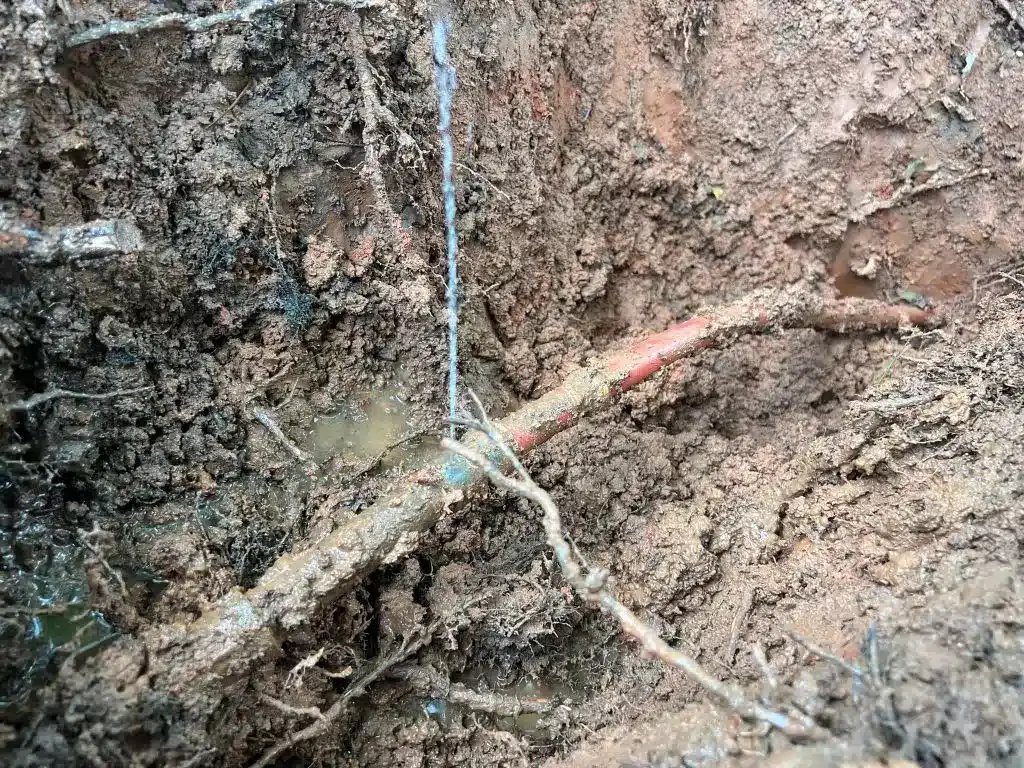
If testing points to a slab, underground, or larger-scale issue, we also specialize in Slab Leak Detection, Underground Water Leak Detection, and Commercial Leak Detection.
Water Leak Detection Service Areas
Georgia Water Leak Detection serves homeowners, businesses, and property managers throughout Marietta, Cobb County, metro Atlanta, and nearby areas.
Our current service area includes communities such as Marietta, Atlanta, Sandy Springs, Roswell, Alpharetta, Kennesaw, Woodstock, Brookhaven, and other surrounding metro Atlanta areas.
We are based at:
2985 Gordy Pkwy Suite 116
Marietta, GA 30066
If you are unsure whether your property is within our service area, call (470) 454-5051.
Frequently Asked Questions
It depends on the size of the property and the suspected leak type, but most residential inspections can be completed in a single visit. We’ll let you know what to expect when you schedule.
Not to locate it. Our diagnostic process is designed to identify the leak’s location using non-invasive methods first. Opening a wall, floor, or section of ground only happens once testing has narrowed down where the actual repair access needs to be.
Our diagnostic methods are chosen in part based on accessibility. Acoustic detection and thermal imaging, for example, can identify a leak’s approximate location without needing direct access to the pipe itself.
Our focus is on accurate detection. Once we’ve identified the source, we’ll explain what was found so you have the information you need to move forward — through us or a provider of your choice, depending on the scope of the repair.
Cost depends on the scope of the inspection and which diagnostic methods are needed. Call our team for current pricing information based on your situation.
Suspect a Hidden Water Leak?
Don’t wait for a small leak to become a bigger repair.
Schedule a water leak detection inspection in Metro Atlanta today.
